

 There are many aspects to designing a dynamic cable. For example, a cable can be meant to move while in use, as happens when towing or because of wave motion. Other aspects are things like torque balancing, the load versus elongation properties, the crush resistance and fatigue life.
Behind each of these cables is one constant factor very important: a rigorous testing regime that involves checking and describing a cable’s mechanical performance and the applications it can be used for – verification and characterization in industry jargon.
Why we test and analyse
A lot of this verification can be done by analysis (calculations, computer modelling and/or comparing with similar products). This is usually a lot cheaper than performing tests. However, analysis can’t tell you everything you want to know. Their complex geometry makes it hard to verify a cable’s real-world behaviour by analysis alone.
Factor in normal production-related variations in the cable construction and material tolerances, and relying solely on computer-based analysis becomes impossible – and even dangerous. This is why we always perform mechanical tests using real-world samples as well as computer analysis on every new cable prototype we develop. Better safe than sorry.
Designed, built and tested in-house
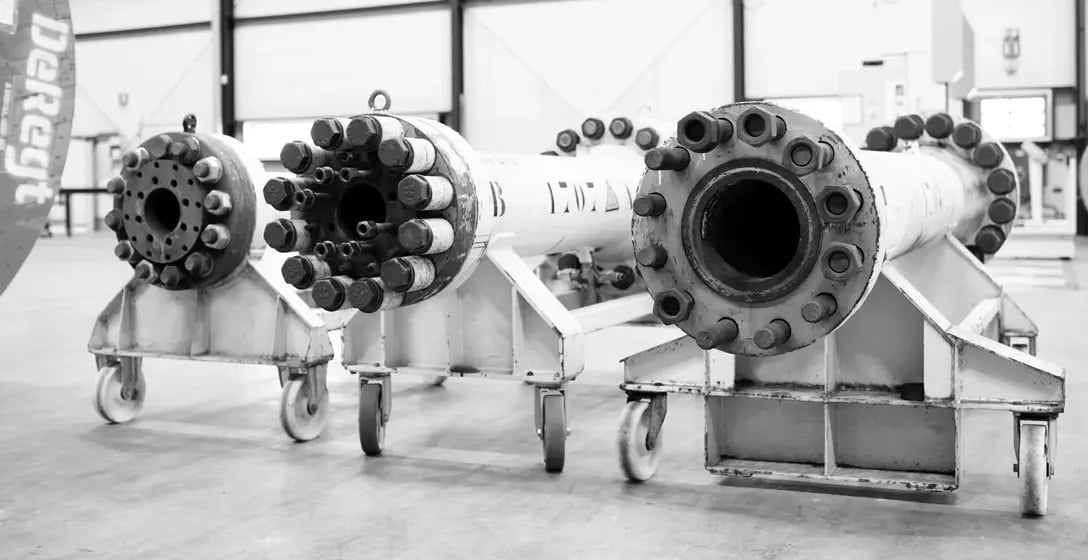
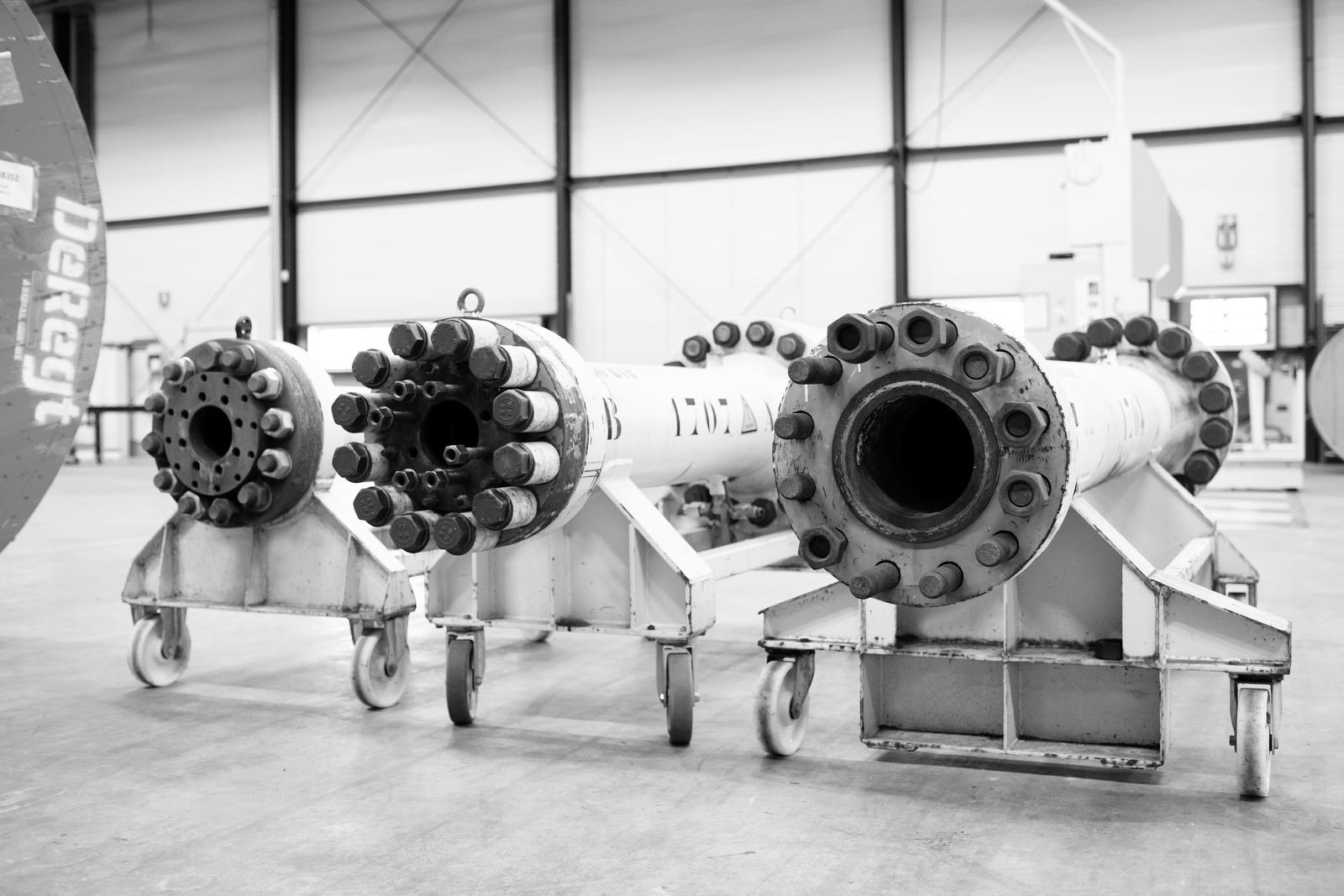
DeRegt has its own testing facility at our facility at Krimpen aan de Lek, near Rotterdam. With multiple mechanical test benches on-site, we can conduct nearly all tests in-house. We run seven mechanical tests during the qualification phase, which begins once we have completed the design concept and manufactured a prototype. This prototype cable is used to make test samples.
Assuming the cable passes with flying colours, the design will be readied for production. The qualification phase typically takes a few weeks, but it does vary depending on the complexity of the cable and application. Each cable is also tested before it leaves the factory.
The seven most important mechanical tests we perform are:
- Elongation vs load
- Rotation and torque vs load
- Ultimate tensile strength
- Bend cycle fatigue
- Tension-tension fatigue
- Abrasion test
- Pressure test
In this free-to-download whitepaper, all of these tests are explained in more detail. Download it with the button below.

Do you have any questions about our mechanical tests or your specific subsea project? Feel free to contact our experts here.